


Looking at unpleasant pictures of parasites on the Internet and in magazines, many people think that this problem will definitely not affect them.But that is not the case, anyone can become infected with parasites!It has been proven that throughout life almost every person at least once becomes a "home" of helminths and protozoa.
How then?The solution to the problem is competent prevention, which we will talk about in this article.
About parasites in facts and figures.
Despite the development of modern medicine, the prevention of parasitosis remains relevant today.The need for preventive measures is demonstrated by the following figures and facts:
- According to the WHO, there are more than 4.5 billion people in the world who suffer from parasitic infections.Parasites cause 16 million deaths each year.
- In Europe, one in three inhabitants suffers from parasitic infestations.
- More than 70% of our country's population is infected with toxoplasma, a parasite that can cause vision loss and neurological disorders.
- Every year, at least 20% of children attending educational institutions become ill with helminthiasis.
- A person can be attacked simultaneously by up to 15 species of protozoa and more than 250 different species of worms.Helminthiasis accounts for approximately 89% of all parasitic infestations.
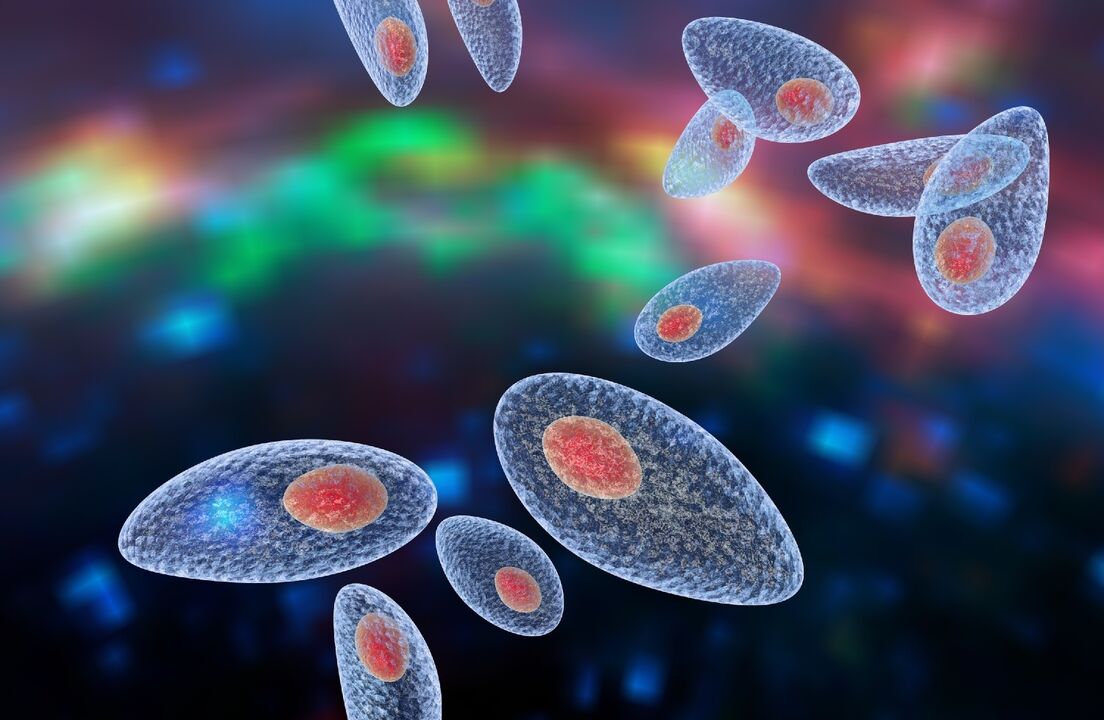
Parasites can affect not only the digestive tract, but also other vital organs: the heart, liver, kidneys and brain.Traveling throughout the body, they cause mechanical damage to organs and tissues, obstruction of bile ducts and inflammatory processes.In addition, they can cause decreased immunity, allergic reactions and oncology.
What are the types of parasitosis?
There are many parasitic diseases.The most common include:
- soil-transmitted helminthiasis- diseases caused by parasites that spend one of their life cycles in the soil.The eggs of these parasites can survive in the soil for up to 7 years, surviving severe frosts and being invasive;
- zooanthroponosis— parasitic infestations that affect both people and animals;
- pure anthroponoses- diseases characteristic only of humans.
Separately, among parasitic infestations, contagious diseases are distinguished, in which parasites can be transmitted from person to person.
How can a person become infected with parasites?
Sources of parasitic diseases can be:
- household items in the apartment, public places, transportation;
- Foods: raw or insufficiently processed vegetables, fruits, meats and fish.Parasite infection is especially common in summer, when we enrich the diet with vitamins: fresh berries, vegetables and herbs.These products may contain grains of soil and, therefore, parasite eggs;
- tap water, river water, lakes.When swimming in a pond, parasites can enter the human body through the skin, mucous membranes, as a result of ingestion of water;
- pets.All pet owners have a high probability of becoming infected with zooanthroponosis;
- children's sandboxes.For example, children's sandboxes may contain animal feces, which means there is a possibility of helminth infection.
A common cause of parasitic infection is poor personal hygiene.Infection can occur if you do not wash your hands after visiting public places, going to the bathroom, handling money, gardening, preparing fish, meat or salads.
There are a number of professions in which people, due to the nature of their activities, have a high probability of becoming infected with parasites.These specialists include plumbers, livestock farm workers, agricultural companies, the food industry and area cleaners.
There are also parasites that are carried by insects.For example, flies, mosquitoes.

Principles of parasite prevention at a social level
In our country, around 1 million patients with parasitic diseases are registered annually.In this sense, preventive measures have been developed to prevent the spread of parasitosis.The basic principles of prevention include:
- Identification and timely treatment of patients with parasitosis.A person cured in time does not represent a threat to others.
- Timely destruction of pathogens of parasitic infestations by disinfection and disinfestation methods.This includes disinfection of wastewater, food and insect treatment in public places.For example, treating mosquito resting areas can prevent diseases such as heartworms.
- Protection of the environment against contamination by substrates containing parasites.First of all, this concerns the timely disinfection of cesspools and the prevention of the use of fresh animal feces as fertilizer in agriculture.These requirements are enshrined in law and require strict implementation.
- Prevention of parasitic infestations using chemotherapeutic agents.For example, when traveling to the tropics or places where malaria is endemic, it is necessary to use antimalarial medications.These remedies prevent the development of malaria even in case of possible infection.The same can be said of the professional groups of the population.During certain periods, chemoprophylaxis of parasitic infestations is recommended for workers on livestock and agricultural farms.
- Immunoprophylaxis or immunization of the population in areas where parasitic infestations develop.This measure is more concerned with the prevention of protozoan infection than with helminthiasis.
- Improve the general health culture of the population.
Personal parasite prevention measures.
There is no magic remedy that can protect a person from all parasitic infestations.Prevention of parasitic infection is multifaceted and includes many aspects.Prevention measures depend on the type of parasite, its development cycle, and how it enters the human body.
However, we can highlight basic rules that can reduce the risk of developing parasitosis:
- personal hygiene: thorough hand washing after visiting public places, contact with pets, before eating;
- regular wet cleaning of the apartment with disinfectants;
- regularly boil bedding and underwear;
- purchase of meat products in authorized trading places;
- sufficient heat treatment of meat and fish, which should last at least 30 minutes.Another effective way to combat parasites is to pre-freeze fish and meat;
- wash and treat vegetables, fruits and herbs well with boiling water;
- drink bottled and boiled water;
- protect food from insects;
- Periodic detection of parasites.
Plants that can protect against parasitosis.
An effective measure to prevent infection by helminths and protozoa is to enrich the diet with plants and condiments with antiparasitic effects.Today more than 50 species of plants are known that have a detrimental effect on parasites:
- calamus roots.The plant is capable of infecting the nervous system with parasites and expelling them from tissues and organs;
- marshmallow roots.It acts on parasites that live in the blood and muscle tissue;
- basil leaves and stems.The antiparasitic effect of basil is similar to that of marshmallow;
- berries, stems, leaves, roots of barberry.The plant is especially effective against parasites that attack the liver;
- carnation.The effectiveness of cloves against parasites has been known since ancient times.Cloves are destructive to flatworms, tapeworms, nematodes and protozoa.In addition, it is effective against bacteria and viruses;
- grenade.Not only the fruits of the pomegranate, but also the peel have an antiparasitic effect.Pomegranate peels can be used to make tea;
- roots, elecampane flowers.They kill parasites that infect the digestive tract and nervous system.In addition, the plant eliminates toxins from the body;
- the aerial part of oregano, which is used to make teas.The plant has a detrimental effect on protozoa, fungi and opportunistic microorganisms;
- St. John's wort.Actively fights against luminal parasites that live in the interstitial space of the colon;
- ginger roots.Able to expel parasites from the respiratory system and gastrointestinal tract.The plant not only has immunomodulatory antiparasitic, but also anti-inflammatory properties;
- fruits, seeds, flowers of viburnum.The plant expels parasites from the bronchopulmonary tree, the urogenital tract and the gastrointestinal tract.In addition, it has an anti-inflammatory effect;
- cardamom seeds.They have a powerful effect on the larval stages of parasites and protozoa and have an antifungal effect;
- Coriander (cilantro) seeds are a common plant often used in salads.Good for expelling intestinal parasites;
- cinnamon.It does not lose antiparasitic properties even after heat treatment;
- nettle.Effective against parasites that affect the skin, intestines and respiratory organs;
- incense.It has a particularly harmful effect on parasites of the respiratory and nervous systems;
- roots, leaves, stems of common burdock.Helps eliminate parasites located in the bronchopulmonary tree and lymphatic system.
Watercress, red pepper, sesame, alfalfa, raspberries, juniper, birch, mint, wormwood, dandelion, parsley, tansy, chamomile, rhubarb, walnut leaves, fennel and garlic also have a detrimental effect on parasites.

Plants with antiparasitic properties should be used only in prophylactic doses.For example, plants such as St. John's wort, yarrow and tansy in large quantities are poisonous, and an overdose is dangerous.If you are not sure about the safety of a particular plant, be sure to consult with a specialist.
On the other hand, it is worth dwelling on the effect of garlic.Among home remedies for parasites, garlic enemas occupy one of the first places.But in fact, this method is ineffective and very dangerous.Most parasites live in the small intestine, which is not affected by the enema.A possible complication after a garlic enema is a burn of the intestinal mucosa.